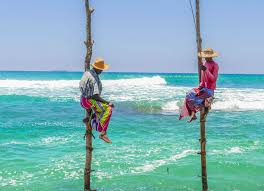
The Stilt Fishermen of Weligama are one of Sri Lanka’s most iconic coastal sights. This traditional fishing method, known locally as “ritipanna”, involves fishermen sitting on narrow wooden poles planted into the shallow seabed, balancing above the water while casting their fishing lines.
This practice began around World War II, when fishing space near the reefs became scarce, and locals developed this creative method to catch small fish close to shore. Over time, it became a symbol of Sri Lankan ingenuity and coastal culture.
Today, stilt fishing remains a cultural tradition and visual attraction, especially at sunrise and sunset when fishermen can be seen silhouetted against the ocean. While some now pose for photographs for visitors, it still reflects the heritage and resilience of southern Sri Lanka’s fishing communities.
With its unique blend of tradition, artistry, and coastal beauty, the stilt fishermen of Weligama offer a glimpse into a way of life that has become an enduring symbol of Sri Lanka’s southern coast.